
Feature Story
Shaping the Government’s Voice: Inside GSA’s Strategic Communication Office
The conversation begins casually—two people laughing about the Las Vegas weather and wishing they had met outside, rather than through a scheduled interview. But beneath the lighthearted exchange is a communication career built on structure, discipline, and precision. For Lisa Marie Raines, communication is not simply about what is said. It is about how, when, and why it is delivered.
After serving 20 years in the United States Air Force, Raines transitioned into a role where words carry a different kind of responsibility. Today, as part of the Government Services Administration's (GSA) Office of Strategic Communication, she helps shape how information is communicated to the public—carefully balancing clarity, accuracy, and trust in every message.

Strategic Communications professional at GSA
Image Source: LISA MARIE RAINES
“I originally came to Las Vegas through the Air Force,” she said. “I served for 20 years, and during that time, I developed strong communication, leadership, and analytical skills.”
These skills became the framework for her transition into government communication. After retiring in 2008, Raines transitioned into a Government Marketing Specialist position, a role focused on shaping messaging and understanding target audiences. Her transition highlights how communication is a transferable skill set rooted in strategy, leadership, and adaptability.
“Most of what I do now involves shaping messaging, understanding audiences, and making sure communication is clear and effective,” she said.

Institutional setting where public communication is executed
Image Source: U.S. GENERAL SERVICES ADMINISTRATION
Building the Foundation
Education also played a critical role in Raines’s career development. While she initially began studying marketing at a community college, her time in the Air Force provided opportunities to further her education.
This academic foundation allowed her to approach communication not just creatively, but strategically.
Marketing, she noted, was an early influence that shaped her understanding of communication.
“Marketing and communication go hand in hand, especially in government work where you’re trying to connect with different audiences,” Raines said.
This connection between audience awareness and message development remains central to her work today.
Her rise into strategic communication was not accidental. It was driven by a deliberate decision to pursue leadership.
“I made the decision early on in the Air Force to become an officer,” she said. “I wanted to be in positions where I could make decisions and help guide strategy.”
That mindset carried into her civilian career, where leadership continues to define her role.
“Strategic communication is really about leadership, managing how information is shared, and making sure it aligns with the organization’s goals,” she said.
Communicating at Scale
At the GSA Office of Strategic Communication, Raines’ work extends far beyond writing. Her role requires a combination of analysis, planning, and coordination across teams.
“A lot of my work involves developing communication strategies, analyzing data, and making sure messaging reaches the right audience,” she said.
In government communication, the stakes are particularly high. Public trust depends on clarity and accuracy.

Metrics guiding communication strategy
Image Source: JESSICA NEDDERSEN/HERZING
In government communication, the stakes are particularly high. Public trust depends on clarity and accuracy.
“If your message isn’t clear, people lose trust fast,” Raines said. “So everything we do has to be intentional, accurate, and accessible to the public.”
This reflects a shift in how public relations operates today—it is no longer enough to distribute information. Professionals must understand how messages are received, interpreted, and acted upon. For Raines, that means relying on data and insight.
“There’s a lot of analysis behind it,” she said. “We look at trends, engagement, and metrics to understand what’s working and what’s not.”
Her day-to-day responsibilities reflect the dynamic nature of the field. No two days are identical.
“Generally, I’m reviewing messaging, collaborating with different teams, and looking at data to see how our communication is performing,” she said. “Some days focus on long-term planning, while others require immediate responses to unfolding situations.”
This balance between proactive and reactive communication is critical in government roles. In moments where information must be delivered quickly, precision becomes essential. Raines recalled situations where communication had to be handled with particular care.
“There have been situations where we needed to communicate important updates quickly and clearly to a large audience,” she said. “In those moments, you have to be very precise with your wording because people rely on that information.”
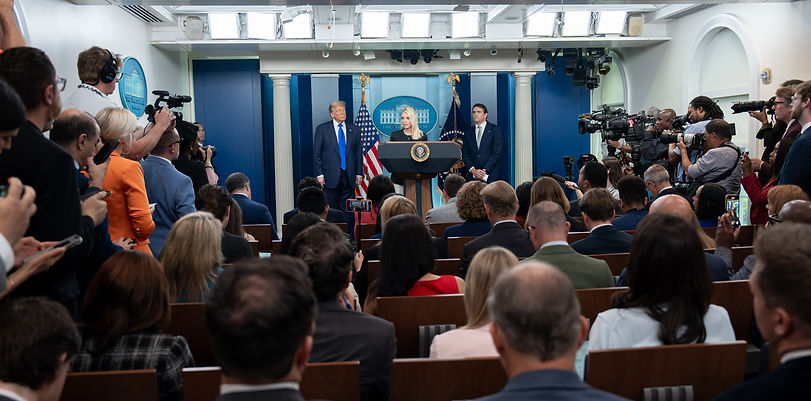
Public communication delivered at scale under media scrutiny
Image Source: DAVID FOLKENFLIK/NEVADA PUBLIC RADIO
Lessons in Communication & Trust
Through her experience, Raines has developed a clear understanding of the public relations industry. One of her key insights is the importance of combining data with communication.
“Data and communication go hand in hand,” she said. “You need to understand your audience and be able to adapt your messaging.”
For students and aspiring professionals, her advice is grounded in self-awareness.
“Understand your strengths and weaknesses,” she said. “Communication is a broad field, so knowing what you’re good at helps you find your place in it.”
Strengths can also present challenges if not managed effectively.
“For example, I’m very detail-oriented and organized, but I can also get distracted,” she said. “Knowing that helps me manage how I work and stay effective.”
As the conversation concluded, the earlier lighthearted tone returned. Yet the underlying message remains clear—behind every government announcement, update, or campaign is a process shaped by individuals like Raines—professionals who ensure that information is not only delivered, but understood.
Ultimately, her work reinforces a simple but powerful idea: in a world driven by constant communication, clarity is not optional. It is essential.